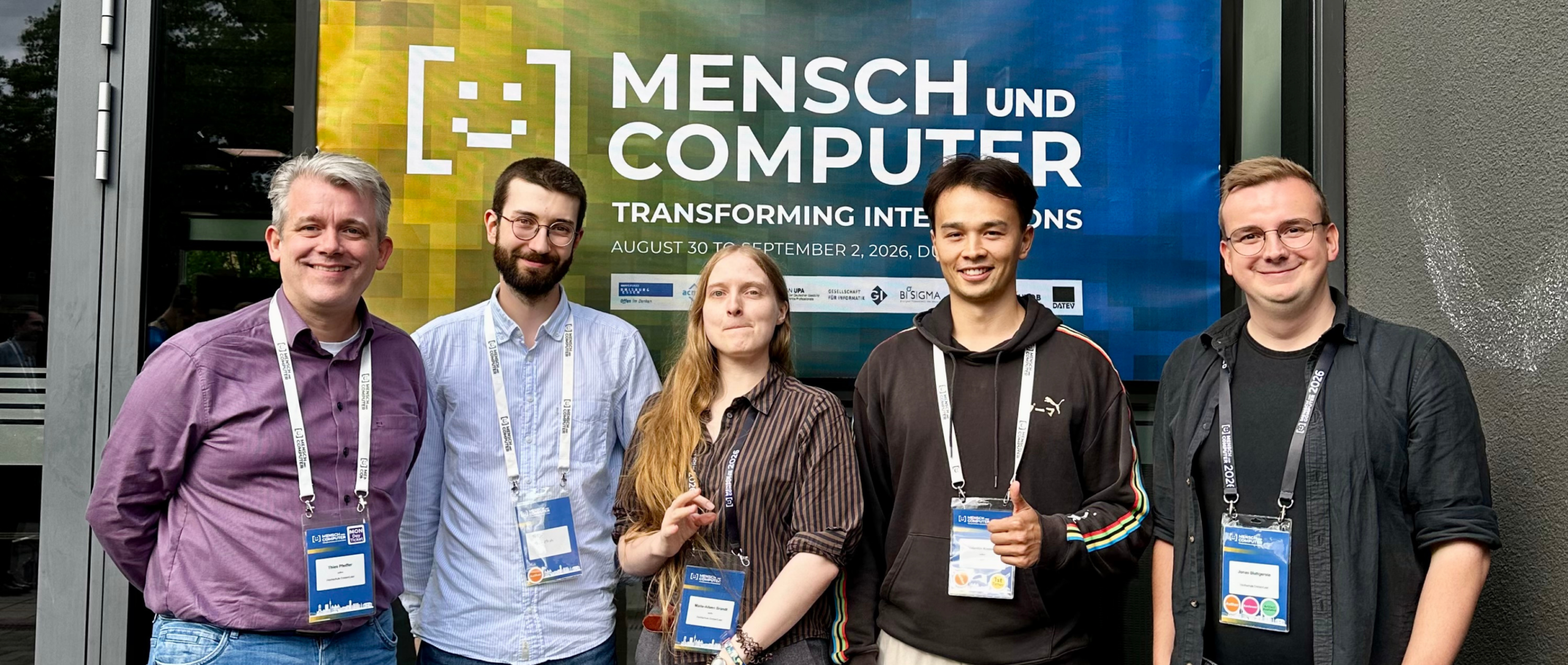
A Recap of Mixality and Collaborators at Mensch und Computer 2026 in Duisburg
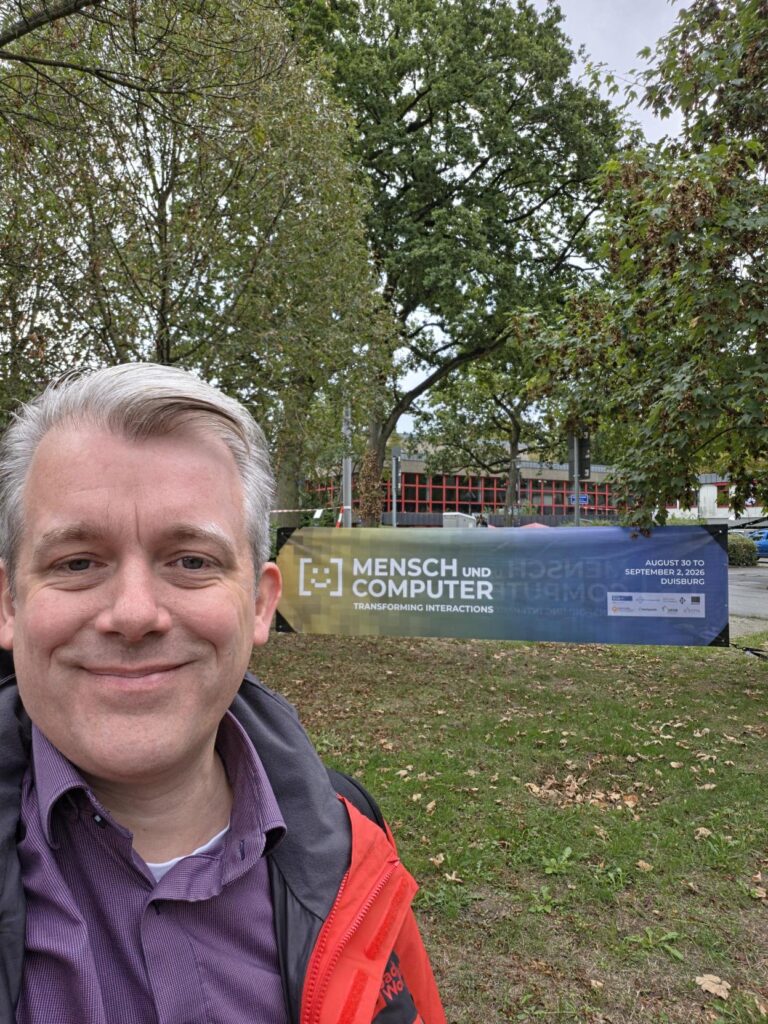
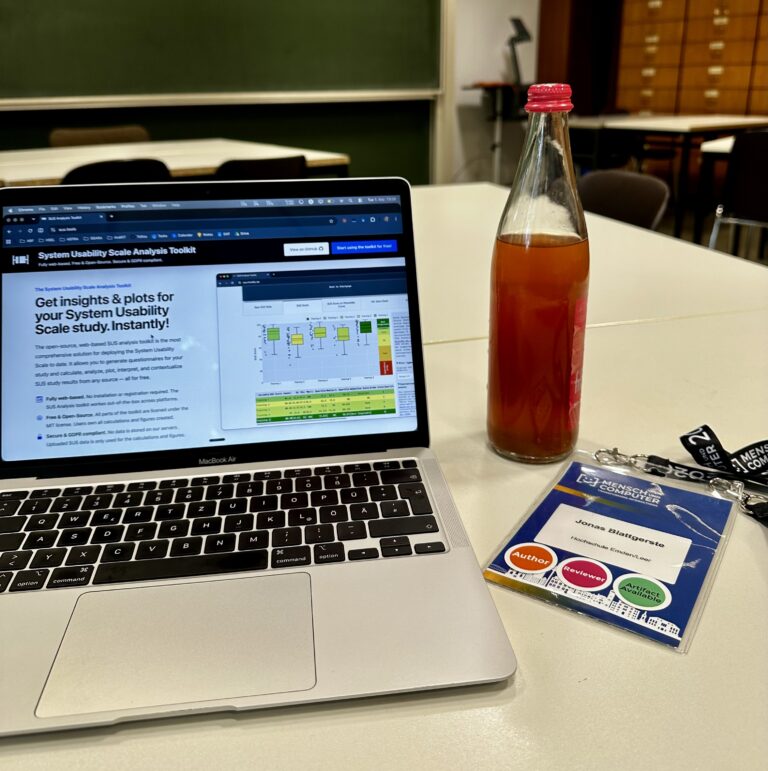
We had a wonderful few days at Mensch und Computer (MuC) 2026 in Duisburg this year! The conference kicked off with a strong workshop day, followed by a main program packed with talks, posters, and many interactive demos, giving us plenty of chances to catch up with the German-speaking HCI community and pick up new ideas. This year, our lab and collaborators brought one full paper, one short paper, and two demos to the conference — plus a spontaneous barcamp session in the Usability Practitioner track by Jonas Blattgerste on the current and future development of our System Usability Analysis Toolkit that turned into an equally rewarding parts of the trip!
So what did we present?
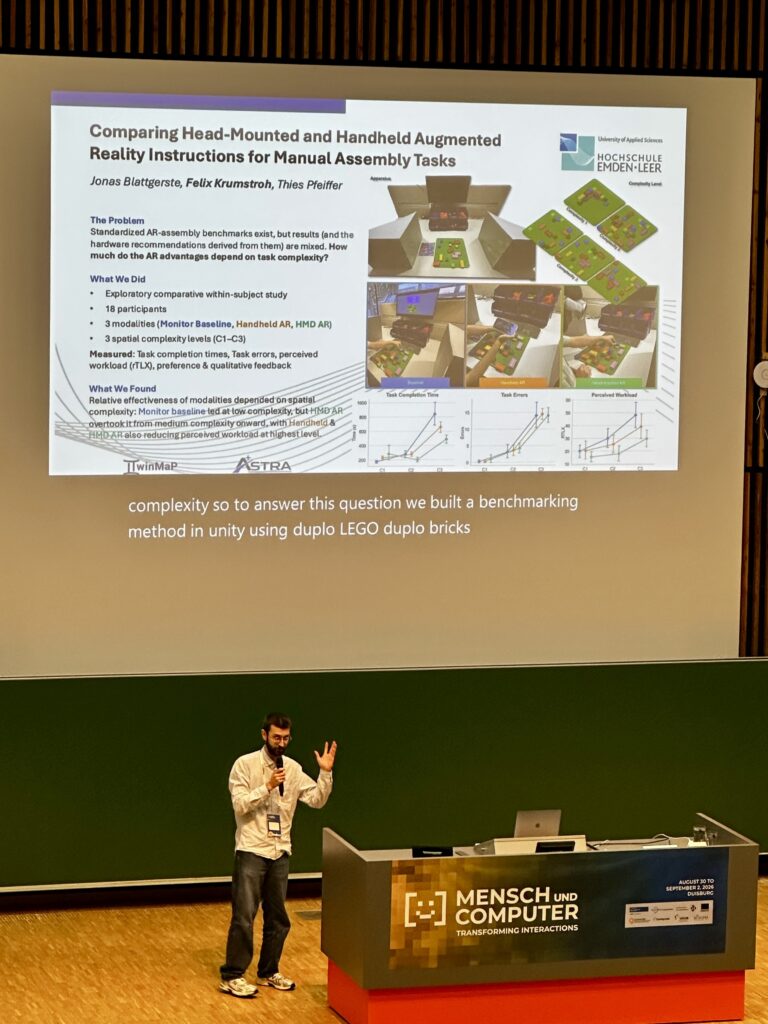
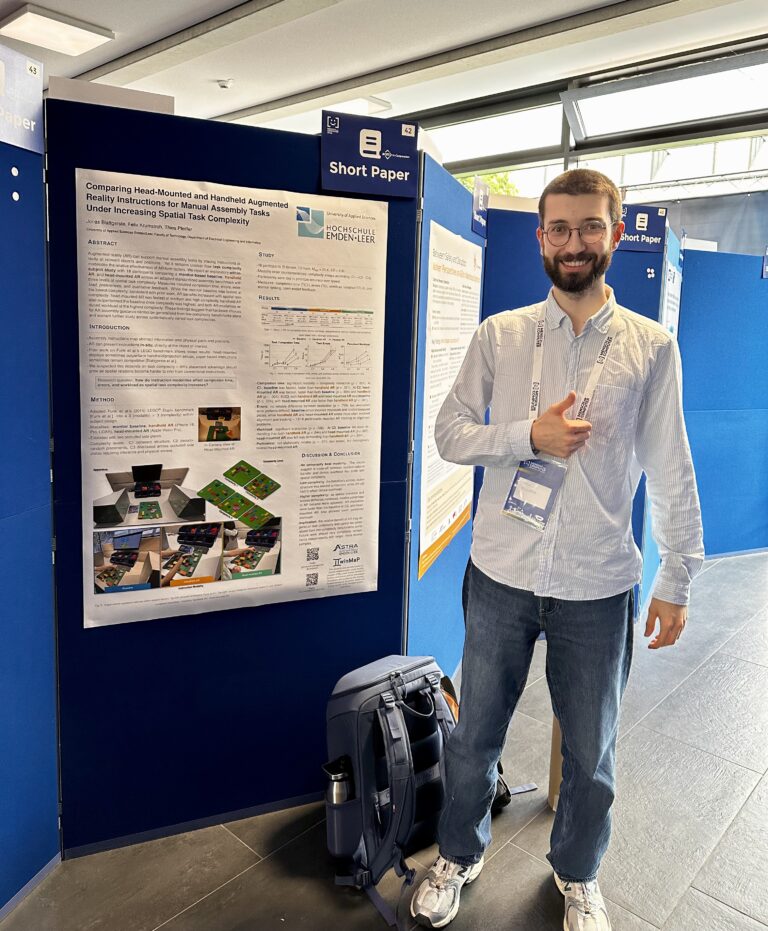
Jonas Blattgerste, Felix Krumstroh, and Thies Pfeiffer presented “Comparing Head-Mounted and Handheld Augmented Reality Instructions for Manual Assembly Tasks Under Increasing Spatial Task Complexity.” In an 18-participant study using an adapted LEGO® Duplo-based assembly benchmark, they compared a monitor-based baseline, handheld AR (iPhone 16 Pro), and head-mounted AR (Apple Vision Pro) across three levels of spatial complexity. While, in line with previous work, the monitor baseline was fastest for simple, low-complexity placements, ARs comparative benefits increased as complexity increased: head-mounted AR was fastest at medium and high complexity, handheld AR overtook the baseline once complexity was highest, and both AR modalities reduced perceived workload at the hardest level. The takeaway: Which AR form factor “wins” depends heavily on how spatially demanding the task actually is. This is a question that’s easy to overlook when benchmarks stay simple.
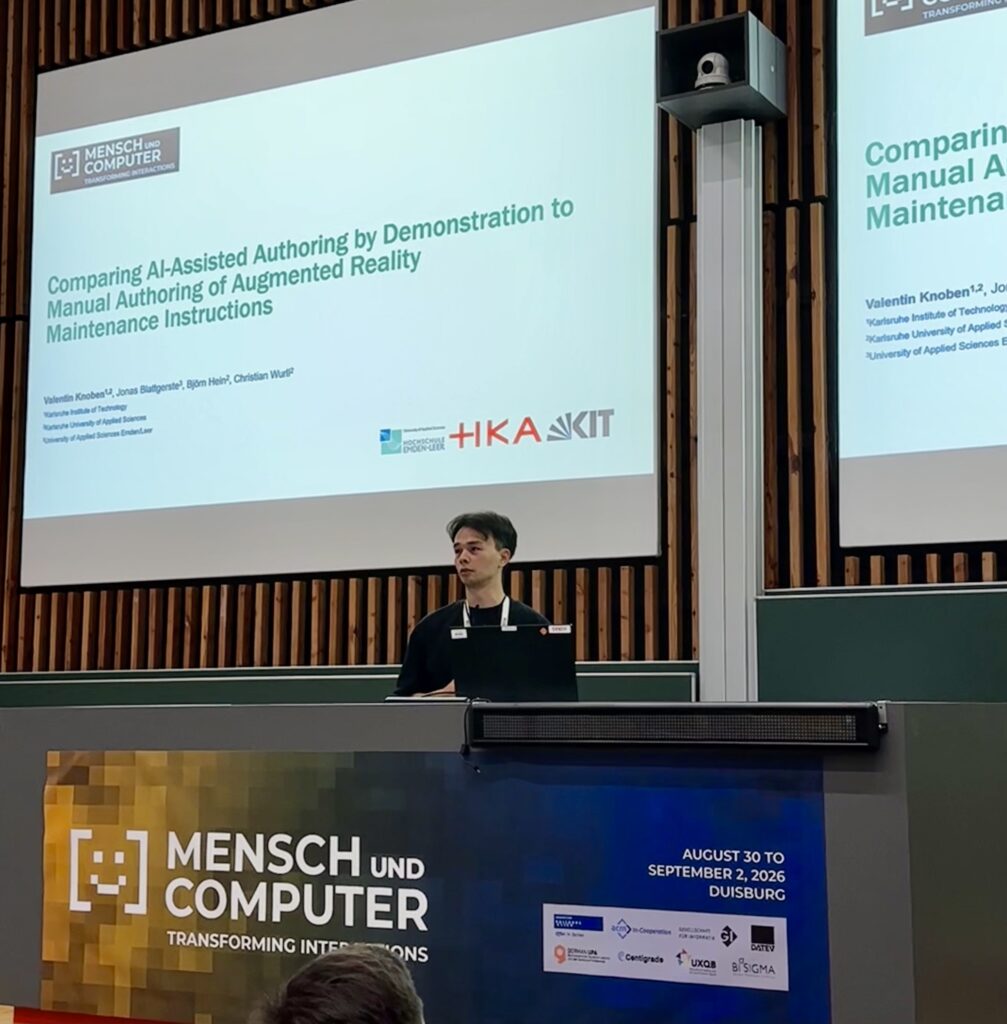
Together with Valentin Knoben, Björn Hein, and Christian Wurll (Karlsruhe Institute of Technology / Karlsruhe University of Applied Sciences), Jonas Blattgerste co-authored the full-paper “Comparing AI-Assisted Authoring by Demonstration to Manual Authoring of Augmented Reality Maintenance Instructions.” The paper introduces VisAARD, an open-source, human-in-the-loop HoloLens 2 authoring tool that turns stepwise egocentric demonstrations into draft AR instructions using a vision-language model, while keeping the human in the loop for review and refinement. In a within-subject study with 21 participants authoring instructions for a robotic-cell maintenance task, VisAARD cut the average authoring time from 36 minutes down to under 20, lowered perceived task load, scored higher on perceived usability, and was preferred by 20 out of 21 participants over the manual baseline modeled after Microsoft Dynamics 365 Guides. Furthermore, qualitative feedback pointed toward a hybrid future: AI-generated structure as a starting point, with targeted manual refinement.
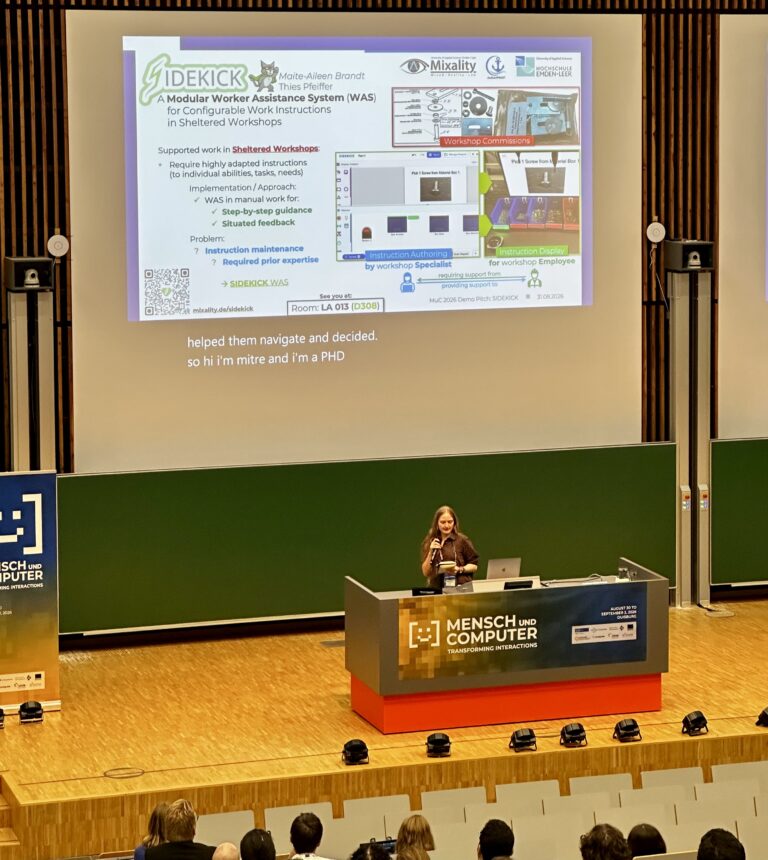
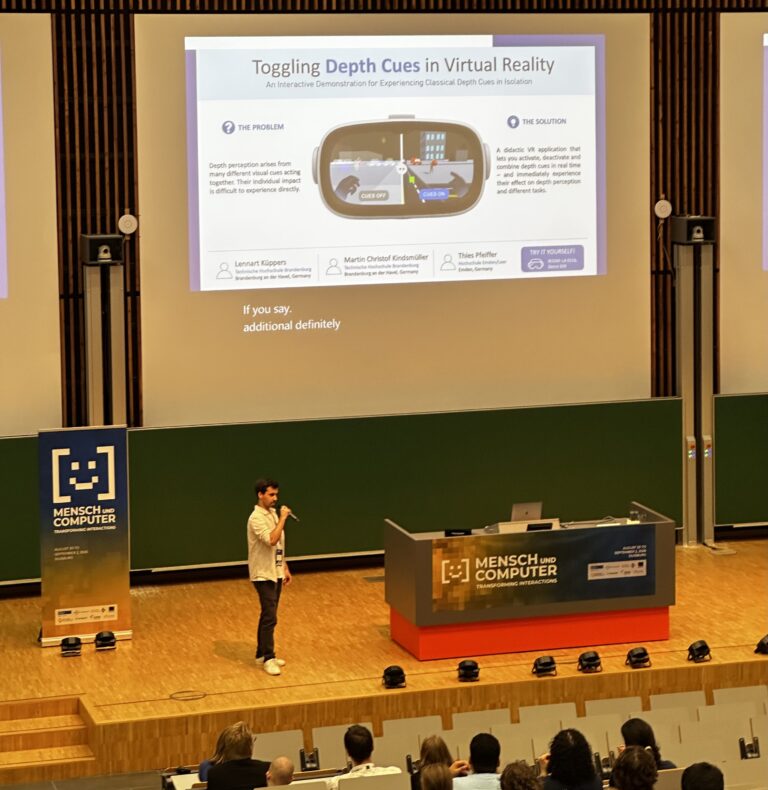
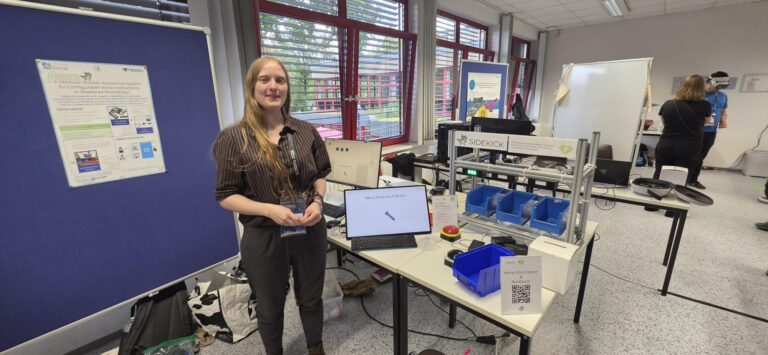
Last but not least, Maite-Aileen Brandt (left) demoed “SIDEKICK: A Modular Worker Assistance System for Configurable Work Instructions in Sheltered Workshops.” SIDEKICK pairs a worker-facing, step-by-step instruction display with physical input and feedback components (buttons, ultrasonic sensors, LED cues) and cleanly separates instruction authoring, runtime guidance, and hardware communication. The goal is a system that professionals in sheltered workshops can set up, configure, and adapt themselves, without needing outside IT support, so instructions stay tailored to individual workers’ needs. Conference visitors got to try all three core processes hands-on: authoring and adapting instructions, pairing hardware devices to instruction steps, and running a live instruction sequence at the workstation. Lennart Küppers (right, TH Brandenburg), together with Thies Pfeiffer, demoed “Toggling Depth Cues in Virtual Reality: An Interactive Demonstration for Experiencing Classical Depth Cues in Isolation.” Built on a modular framework running on a Meta Quest 3, the demo lets visitors activate, deactivate, and combine 15 classical monocular, binocular, and dynamic depth cues within a single shared virtual scene for didactic purposes. This helps to immediately feel the effect on spatial perception. Beyond the free-exploration scene, two practical tasks (precise positioning and relative positioning) let visitors test how missing or degraded depth cues affect real spatial performance, making an often-abstract topic tangible.