Hyperloop is a proposed high-speed transportation system that uses pods or capsules to carry passengers and cargo through low-pressure or near-vacuum tubes, enabling travel at extremely high speeds—often targeted around 600–760 mph (1,000–1,220 km/h). By minimizing air resistance in the reduced-pressure environment and employing magnetic levitation or similar low-friction technologies to eliminate wheel contact, the system aims to achieve airplane-like velocities on the ground while consuming less energy and producing lower emissions than traditional rail or air travel. This could significantly shorten journey times between cities, making intercity trips much faster and more efficient.
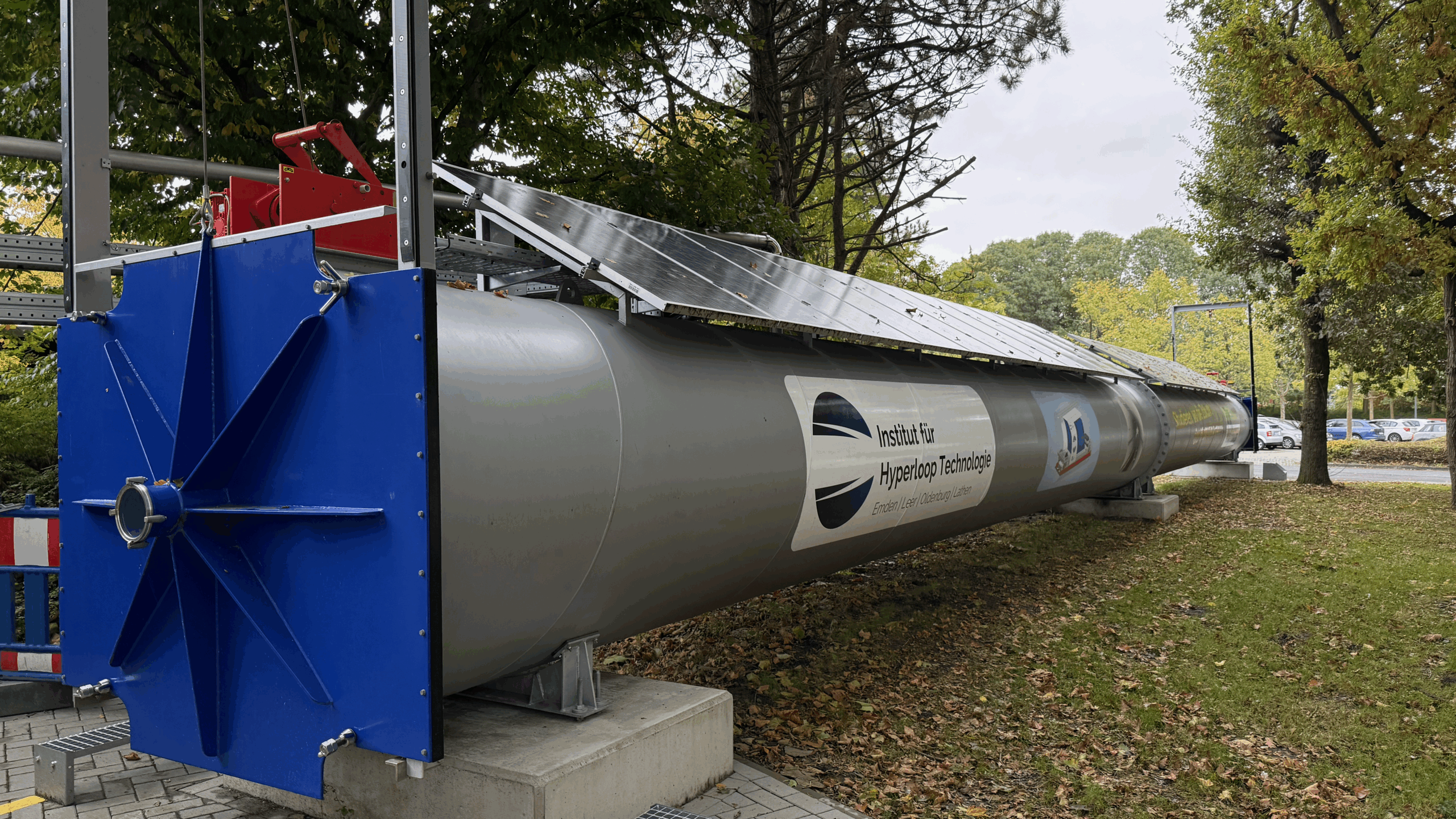
HyperBRIDGE is a interregional project between Germany and the Netherlands. The project aims to accelerate the development of hyperloop technology in the Dutch-German border region by connecting small and medium-sized enterprises (SMEs), universities and research institutions. Launched in October 2025 and funded under the Interreg VI A Deutschland-Nederland. To achieve this goal, Project HyperBRIDGE leverages two key test facilities: The European Hyperloop Center (EHC) in Veendam, Netherland, and the goTube facility at the University of Applied Sciences in Emden/Leer, Germany.
Focus Areas
Project HyperBRIDGE focusses on the following aspects of Hyperloop development:
Structural health monitoring for Hyperloop infrastructure
Communication standards for pod-to-pod connectivity
Operational control systems for Hyperloop prototypes
Immersive digital twins for training, maintenance, and prototyping
Additionally, HyperBRIDGE develops a serious game for business model innovation and a digital knowledge hub. The initiative supports at least 20 SMEs.
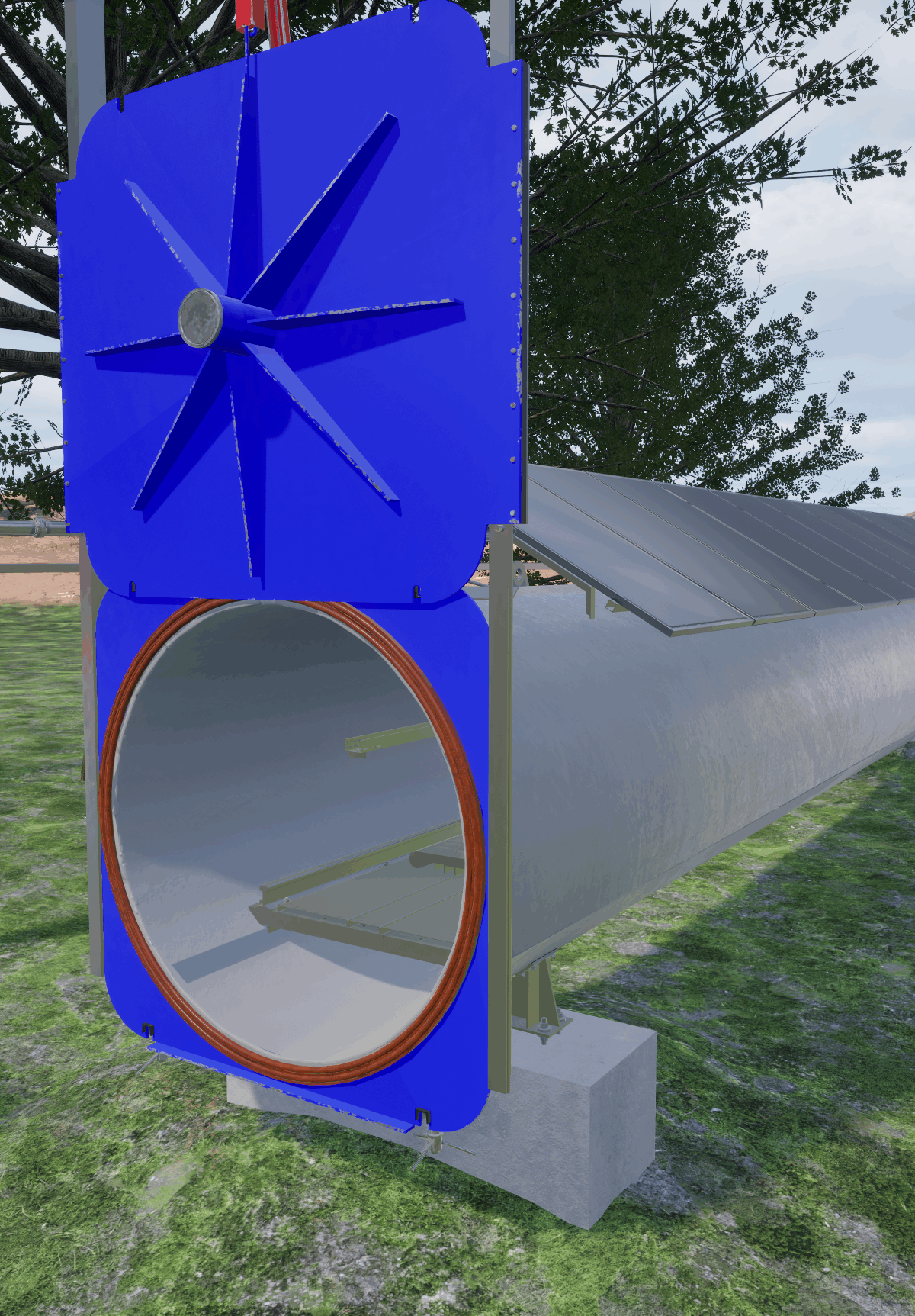
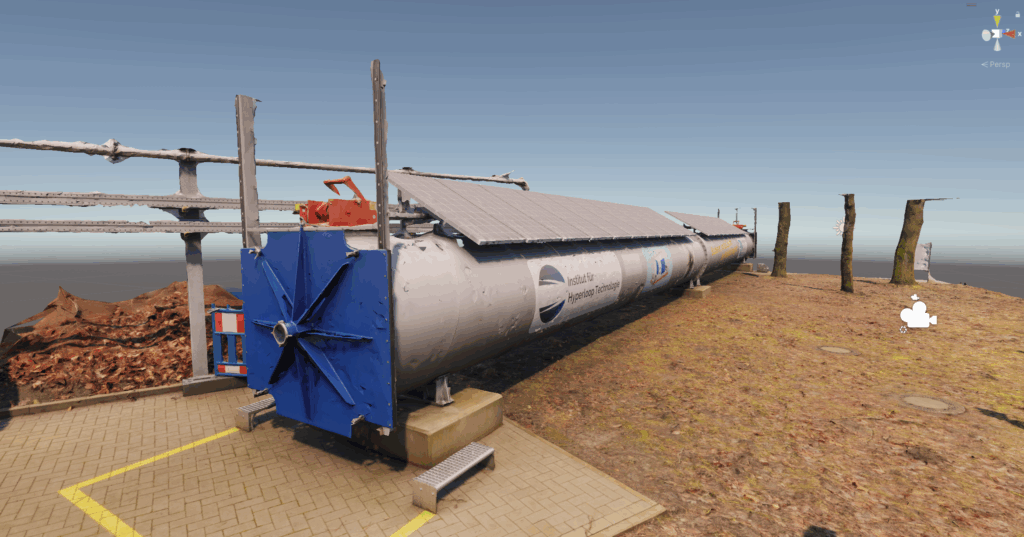
The focus of the Mixality Labs efforts lies in the exploration and development of immersive digital twins with diverse technologies like game engines (Unreal Engine, Unity Engine), NVidia Omniverse, 360° degree video technology and 3D scanning technologies. Our digital twin will be based on real world CAD data and the real goTube, as well as the Hyperloop in Veendam.
The HyperBRIDGE project aligns closely with national strategies in Germany and the Netherlands, as well as European initiatives like Hyper4Rail and the Hyperloop Development Program.
Digital Twins
Digital twins improve Hyperloop maintenance by enabling real-time monitoring, predictive analytics, and virtual diagnostics of infrastructure and systems.
This allows engineers to predict failures before they occur by identifying stress pattern and anomalies, optimize maintenance schedules based on actual asset conditions rather than fixed intervals, perform remote diagnostics and simulate what-ifs-scenarios for faster decision-making.
Further we are enabling training for engineers in realistic and immersive scenarios to prepare them for real world tasks on the Hyperloop.
Intereg HyperBRIDGE Consortium
Stichting European Hyperloop Center
Concept 7 B.V.
University of Applied Sciences Emden-Leer: Institute of Hyperloop Technology / Mixed Reality Lab
VRAME Consult GmbH
Noorderpoort College
Omnidots B.V.
Quantumfrog GmbH
Rijksuniversiteit Groningen – Faculty of Science and Engineering
Stichting Hanzehogeschool Groningen
V-TRON GmbH
HyperBRIDGE
For further details on the project and the development of Hyperloop technology, visit the Interreg project page and the European Hyperloop Center website.
Project HyperBRIDGE is being implemented within the framework of the Interreg VI A programme Deutschland-Nederland and is co-financed by the European Union through the European Regional Development Fund (ERDF), as well as by the Dutch Ministerie van Economische Zaken, the MWIKE NRW, and the Provincie Groningen.