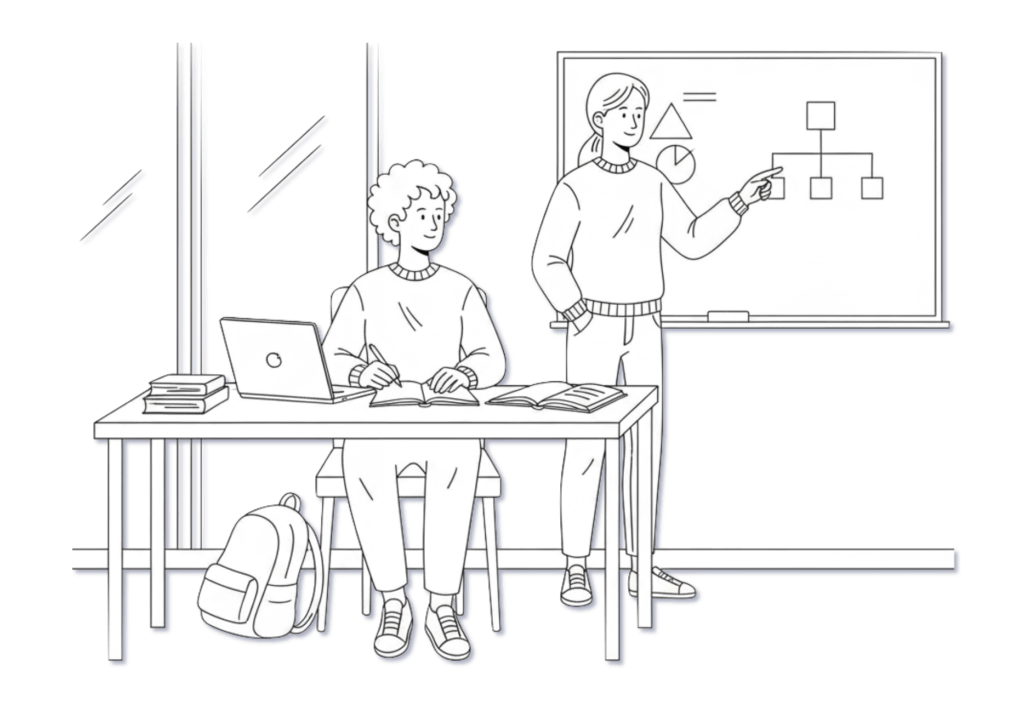
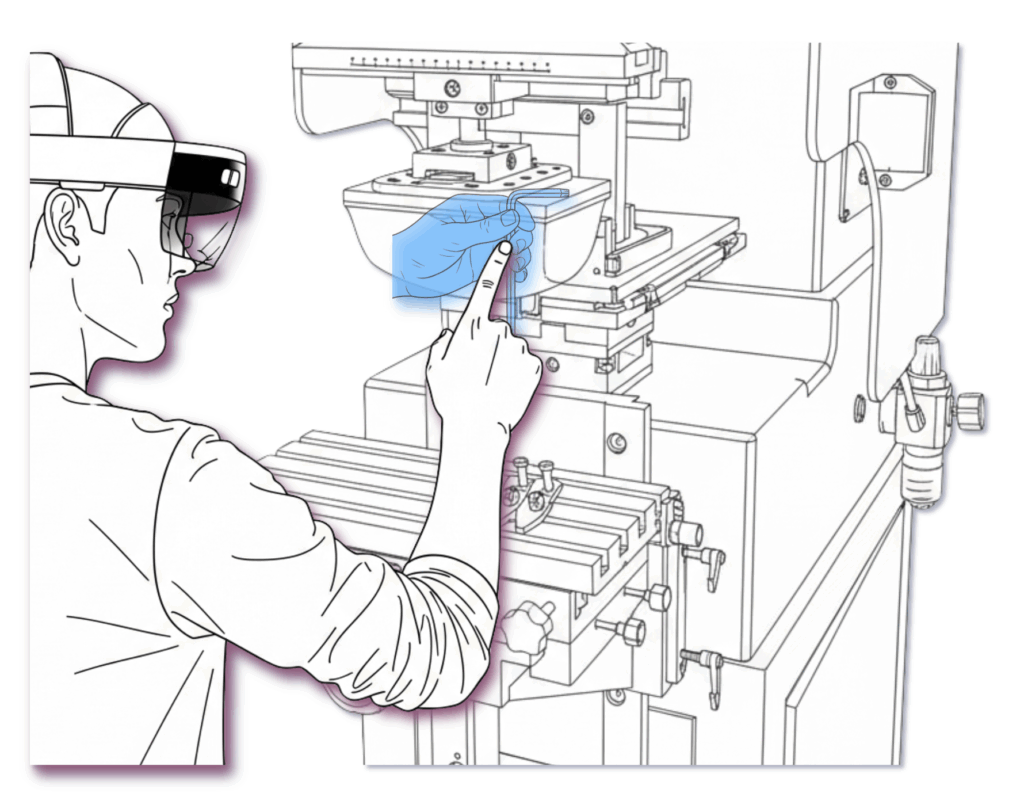
There is a distinct lack of adaptive and socially responsive systems in current educational technology research efforts. Most learning software follows a linear path and misses the motivating effect of a human-like coach. These systems lack the ability to use gestures or voice or react to speech, which limits their potential to engage students. On the technical side, augmented reality is particularly valuable for educational tasks in work contexts because help can be provided directly within the context of the task. However, creating this content remains a significant bottleneck. It typically requires specialized programming skills, which excludes most educators and domain experts from creating their own material.
Project Astra aims to address these two broader issues by lowering the barrier to entry for content creation and increasing the social presence of learning systems through anthropomorphic AI agents.
ASTRA Research Efforts
Project Astra investigates two primary directions to address these challenges. These pillars distinguish between social adaptive tutoring and spatially aware procedural assistance and training.
Direction 1: Social Interaction and Adaptive Tutoring
This research of ASTRA focuses on the role of anthropomorphic digital agents in soft skill and language development. Unlike text-based interfaces, embodied agents can utilize nonverbal cues such as gaze and gestures to guide attention and build rapport. This approach is applied to interpersonal work and school domains, including language learning and social training, where the agent acts as a conversation partner in work related scenarios (e.g. interaction with customers or patients).
From a practical perspective, the project seeks to determine not just technical feasibility but actual pedagogical impact. A central question is whether anthropomorphic agents actually elicit measurable learning or motivational benefits compared to standard methods. It is also critical to identify for which specific tasks or learning scenarios these agents provide value and for which tasks they remain ineffective. Additionally the research explores how the degree of anthropomorphism impacts learner engagement and trust. From an authoring standpoint the project investigates what interaction models allow educators to define complex social behaviors without scripting and whether virtual agents can effectively model cultural nuances in communication training.
Direction 2: Procedural Training and Spatial Authoring
The second research direction of our ASTRA package addresses hard skills and physical tasks through mixed reality authoring tools. The goal is to enable users to create learning scenarios directly in the physical environment (in situ) by either demonstration or contextualized in-situ visual scripting. The goal is to remove the need for programming and allow domain experts to anchor digital instructions to physical objects. Training applications, for example, could include machinery assembly and maintenance, where understanding spatial geometry is critical.
This direction focuses on how the content creation process can be made both more effective and more efficient. Contrasting interaction metaphors, such as in situ visual scripting versus authoring by demonstration, are explored to determine which approach makes the most sense for specific contexts. The project acknowledges that the ideal interaction metaphor depends heavily on both the nature of the task and the background of the educator. Consequently, a central question is how to identify these specific user needs and map them to the most suitable interaction techniques. The ultimate goal is to understand how tools can be developed that adapt to these dependencies rather than forcing a one-size-fits-all approach.
Project ASTRA
The research presented here represents a specific work package within the broader Astra Project, a university-wide initiative to unfold strategic potential. While we focus on educational technology in our sub-project, the wider initiative drives innovation across fields like renewable energy, Industry 4.0, and modern education.
ASTRA is funded by zukunft.niedersachsen, the joint science funding program of the Lower Saxony Ministry of Science and Culture and the Volkswagen Foundation.